Thursday, April 30, 2015

What I have learned from Beloved-reflection


Malcolm X once said “America preaches integration and practices segregation.” After reading this quote, I still believe that it applied during the time period of Beloved in 1873, and still applies today. I think this book really highlighted the emotional impacts of slavery, and really illustrated the effects on the people. In APUSH last year, we learned about the emancipation proclamation, and all of the consequences of the slavery and the civil war had on society, but until I read Beloved, I never pictured how horrible it was even after slavery was illegal really puts the reader in the perspective of the African Americans at this time. In a way, these millions of “freed” slaves, were still enslaved by the prejudice and inequality that African Americans suffered through. This book doesn't just tell the story of one family, it captures the struggle many families went through and represents years and years of oppression.
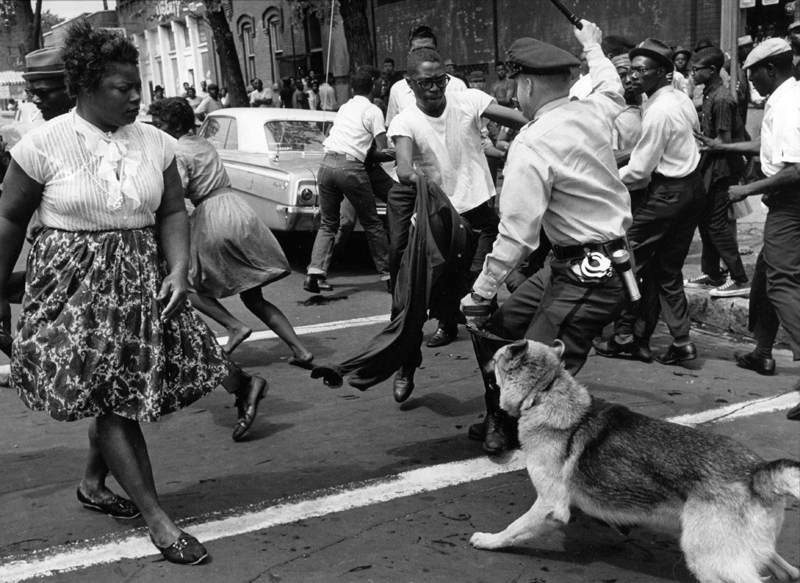
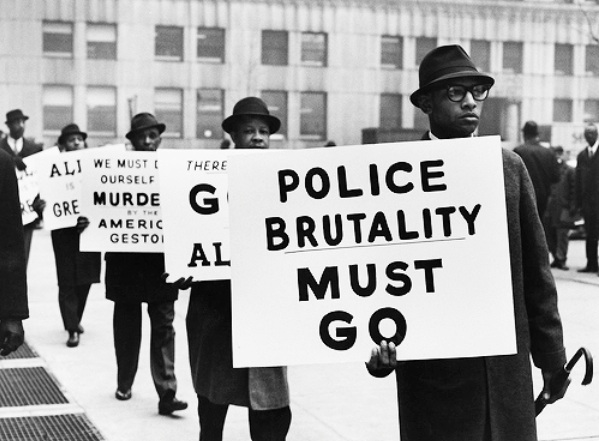
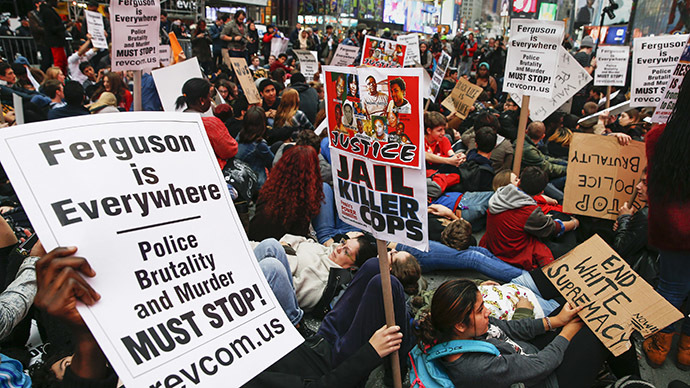
Recently in government class, we have been studying current events, and one very common issue that has been brought up is police brutality. As I have mentioned in a past blog, this seems to be a reoccuring event and the racism and prejudice that is left over from slavery, still seems to affect our daily lives. In a recent event in Baltimore, after arresting an African American suspect who suffered many fatal spinal injuries from an arrest, died of unknown causes from the car ride with the police. Police had handcuffed him, and neglected to buckle his seatbelt, which caused even more severe spinal injuries, and resulted in his death. After hearing about this event, it reminded me of a part in the book, when Paul D and other prisoners, were chained up in boxes and treated like animals, beat up by the slave owners. Though this is an entirely different situation, it seems just as inhumane to do this to another human being. Just in the last couple months there have been countless incidents that involve violent attacks from the police, which cannot be a coincidence. This book really made me think about the long term effects of slavery and how it has affected present day. When reading about the past, it is easy to just think about what it was like back then, but there it is still so influential even today. There is still so much inequality of education, socioeconomic status, and discrimination.  More than 100 years later, as a society were still suffering from slavery’s horrific consequences.





Being Free responding and reflecting

“Freeing yourself was one thing; claiming ownership of that freed self was another”(112). After reading this book, this quote really stood out to me. Like I have said in my earlier blog, it was one thing to be free, but to be able to own yourself and your emotions, and struggles is something else. Throughout the story, characters struggle to bring up the past, and have a hard time dealing with the traumatic experiences. In Sethe’s case, she fears that bringing it up, will bring herself and her children back to Sweet Farm, where she had no freedom, where it was so demeaning. A recurring theme I saw in the book is facing the past head on instead of hiding it and being fearful of it, because that is when it can be troubling. A message that I interpreted, that I believe Morrison was trying to convey is as a society, we cannot forget our mistakes and we have to change for the better. Slavery will forever haunt our society, but we have to learn from the past mistakes and not forget what millions of people suffered through.
This also really stood out to me because after her escape, she believed she would be able to live out her life in peace. But even after she escaped, she was almost constrained in a way. After she killed her daughter, she still lived a life of trauma, and is always haunted by Beloved. As a result of this she lived a life of completely isolated, and though she had her freedom, she was an outcast in her own community, wasn't necessarily “free”.
Throughout the book, Morrison conveys the message that in order to be completely free, you have to let the past in and “own it”. Sethe never truly “owns” the experiences she went through which is understandable. She tries and hides from it which causes her more fear in her present.
I also think that when Morrison says, “claiming” she is saying that with freedom also means claiming our mistakes. After Sethe kills her baby, it haunts for the rest of her life. In 124, she is alone, and doesn't seem to except what she did to her baby. When Denver starts to ask questions about the past, this brings up the guilt Sethe pushed away, and brings Beloved back. Morrisons underlying messages of in order to find freedom, you have to own yourself, your emotions, and your past to be completely free.

Baby Suggs and the Clearing Critical Lens

“Cry, she told them. For the living and the dead. Just cry. Women stopped crying and danced; men sat down and cried, children danced, women laughed, children cried until, exhausted and riven, all and each lay about the Clearing damp and gasping for breath…Here, she said, in this here place, we flesh; that weeps, laughs; flesh that dances on bare feet in grass. Love it. Love it hard”(103).


In this passage, Sethe is thinking about the times when Baby Suggs would gather people in the clearing and join as a community. She would shout and sing inspirational words, and as Sethe is reminiscing about this she thinks about Baby Suggs’s words, when she feels more alone then ever.
This passage has great significance because as a community these former slaves and their children are owning their pain, and in a way celebrating it, and celebrating the fact that they are not just free physically, but they can now start to grieve their pain and let it out. A reoccuring theme throughout the book is suppressing past experiences and trauma won’t undo any of the horrific actions that happened, which is something that Sethe and Paul D struggle with throughout the book. This passage illustrates as a community, African Americans owning their issues and not letting it haunt them anymore.
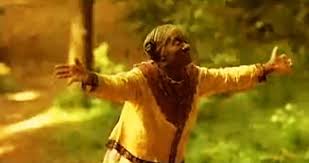
When they are in the clearing and Morrison describes, “men sat down and cried, children, danced, women laughed.” This is a very powerful statement in many ways. The ways blacks were treated were so dehumanizing, and this signifies one of the most human things possible, emotion. After being “owned” by someone and finally being free, this illustrates such an empowering moment. Baby Suggs is saying that they should own their own emotions and not what happened to them control them, and let their emotion be free. Being held as a slave is so demeaning, and this reminds everyone as a community that they are human, they are free, and they should celebrate the overcoming adversity. For the most part, Beloved is a very dark story showing the experiences and the severe outcomes that slavery caused on millions of African Americans. But in this passage, it is uplifting and is showing African Americans as overcoming slavery, and facing it.


Wednesday, April 29, 2015

Post Colonialism, Beloved and Ghosts


In Ruth Van Den Akker’s Hush, Little Baby-Ghost: The Postcolonial Gothic and Haunting History she analyses the ways Toni Morrison demonstrates the horrific actions of slavery through gothic style literature, and is able to “speak about the unspeakable”. In this article, Akker claims that trauma is an “injury to the mind”. This influences the way in which Morrison is able to write this story and view it as post colonialism. Because the ghosts in this story are a result of guilt and trauma Sethe faced, as a consequence of slavery. The “gothic” literature used throughout this story are all symbols used to represent the pain and guilt coming back and haunting Sethe. Akker claims that the death of Beloved as a baby represents the silencing of slavery and the years of oppressed people, who’s humanity and freedom were taken away. The return of Beloved as an adult ghost, brings up oppressed memories for Sethe and therefore represents these horrific things that she tried to let go, are brought up again and making both former slaves and slave owners face the awful things that happened.
In addition, Akker brings up the idea that the past can never be left behind. Beloved is greatly influenced throughout the story, shown with Sethe’s fear for her children going back to Sweet Home, not wanting to talk about her experiences as a slave, but still knowing that the events that happened will always be there. Morrison shows this when Sethe is describing to Denver about her experiences on Sweet Farm she states, “What I remember is a picture floating around out there outside my head. I mean, even if I don't think, even if I die, the picture of what I did, or knew, or saw is still out there. Right in the place where it happened” (43). This quote signifies the fact though slavery is now illegal, it will always haunt those were affected, and even the generations after.
Sethe’s fear of having her children return to Sweet Farm is so strong, she kills her baby, Beloved. The power that slavery had over her, even when she was free, drove her to insanity to try and protect her children. Though this is a very extreme and most people would see this as a deranged way to protect her children, this illustrates how Sethe believed that nothing is worse than being a slave, not even death and, was trying in her own way, to protect her kids, and her fear of returning to the past. This is just another example in how Morrison illustrates through the post colonial lens the effects of slavery, how it has haunted not just Sethe, but millions of others African American families like her.

Prompt:
Read at least one article/essay of academic literary criticism about your text or lens (as provided by your teacher). Ideally, the article should be a reading of your text through your chosen lens, but if such a thing is not available, other types of essays will suffice.


Heather Duerre Humann explained that in Beloved the type of racism that occurred throughout the book and how Morrison deliberately showed when exactly characters were being racist. Humann Explains that Morrison uses scientific racism, an example of this is when the school teacher made Paul D and all the other slaves feel like they were "trespassers among the human race". This degrades them and makes it seem as if they are not human and just an animal. Morrison uses scientific racism a great deal and is very powerful and showed the hatred towards the African American race. The white people made themselves superior to all the slaves and did so by treating them like animals by buying and selling them.

If I did not read that essay I would be very much unaware that there actually was different types of racism, but after it was clear to me that what Humann was saying was very obvious. They made them feel like animals, as if they weren't worthy to be considered humans. And this was very clear in the book, when Sethe was rapped and was milked like a cow. Being assaulted like that and being handled like an animal shows that they have no respect for another human being, because she is black she is treated like trash and thrown to the side once they were done violating her. Along with that there was a part in the book when Paul D was in a cage chained up like an animal, being in really bad conditions. This is also a very obvious that in this book, the African Americans are treated like animals and given the least amount of respect given to them.

Humann's point of view on this book helped me see the disrespect is much more than seeing them as objects but how they treat them is obvious that they are seen as animals. Which was very noticeable when they would be abused like as if they weren't living humans.

Beloved and the "Slave Narrative Song"


In Peter J. Capuano’s interpretation of Beloved, he claims that Beloved was greatly influenced by Frederick Douglass's Slave song in 1845, but differ in “political and historical objectives”. Because Morrison’s goal was not to abolish slavery since they were written in different time periods, she had more ability to show the severe emotional effects slavery had on African Americans, whereas Capuano relies more on facts to state his ideas, because it was written during a time when slavery was legal, and he was writing it with the objective to show why it needs to be ended. However, Morrison uses the song as an underlying theme throughout the story, and also uses song to symbolize hope for her characters. Capuano claims that because Beloved was written after the emancipation, instead of writing about the crimes in which whites committed, or “oppressor” she writes about crimes and faults former slaves committed or, the “oppressed”. Morrison does not only illustrate how slavery was inhuman, she also uses the characters to show them overcoming adversity of physical, and psychological abuse. Capuano states that Sethe, Paul D, and Sixo sing, and is based off of “sorrow songs” from Frederick Douglass, and claim they use it to give them hope and fight against adversity. When they cannot read, or write about their experiences as slaves, this lets them express their struggles.
After reading Peter J. Capuano’s article, it gives a different view on what Toni Morrison’s songs mean. The idea of what the songs symbolize throughout the story, is like the character’s way of grieving, and overcoming the obstacles they have faced. We see this in many different forms. One example of this is when Baby Suggs would go to the meadow, and join as a community with other African Americans. As she gathers people together she would say, “Here,in this here place, we flesh that weeps, laughs; flesh that dances on bare feet ingrass. Love it” (103). This is written as Sethe’s memory, and as she thinks about it she says she “wanted to be there now. At the least to listen to the spaces that the long-ago singing had left behind”(104). Baby Suggs was able to create a community that almost celebrated their greif and shows their endurance to be able to get through anything. The songs allowed for them to be free, because though they were “legally” free, in a way they were still being held by the horrible consequences slavery had caused.
In another example where songs are used as hope for the characters, is when Paul D sings when he was chained up.  He and the forty six other chained up men, “sang it out and beat it up, garbling the words so they could not be understood...They sang the women they knew; the children they had been ,the animals they had tamed themselves or seen others tame”(128). This moment signifies how powerless the men felt, but this singing gave them power. When they were like animals, the songs gave them humanity and made them remember the people and the things that gave them strength to escape.


Attachment disorders and PTSD

The book Beloved by Toni Morrison explores many psychological disorders. The main character, Sethe, experiences extreme PTSD from her past life as a slave. Other characters as well have PTSD, but not to the degree of Sethe’s due to how she acts on it. In this book the main shocking thing the reader finds out is that Sethe had killed her baby and tried to kill her other children to keep them from a life of slavery. Although this is meant to shock the reader, I personally am not surprised. The signs of PTSD are seen early on in the book with Sethe. She gets flashbacks consistently and is triggered by certain things and events. An example of this is at the beginning of the book when Sethe has a flashback of Sweet Home before Paul D shows up.  She shows intense feelings and reactions to things as well as a lack of maturity at times when she shuts down. This is seen when she is giving birth to Denver and she is being taken care of by the white girl. She rubs her feet and takes care of her. 
Beloved also shows signs of having an attachment disorder. She feels the need to be with Sethe and feels as if she cannot live without her. She says that Sethe “is the one. [Sethe] is the one [she] need[s]. [Denver] can go but [Sethe] is the one [she has] to have” (pg 89). This shows her lack of ability to form normal relationships. She obsesses over people which is not healthy. Towards the end of the book the reader sees the unhealthy relationship between Sethe and Beloved as Beloved begins to assert control over Sethe. She starves and whips Sethe, and Sethe submits to this treatment out of guilt. This is sadistic behavior on Beloved’s part and displays an intense example of an abusive relationship. Denver also has issues due to her isolation throughout the years. She obsesses over Beloved. She expresses her fear of Beloved leaving them in the beginning of the book. This is logical because she has no one aside from Sethe to spend time with. All of the disorders in the book Beloved I am familiar with. I also see the less intense thinking errors within the book in my day to day interactions with people. I personally struggle with a few of the issues in the book however they are obviously much less intense than the characters in the book. The books character interactions closely follow psychological realities.